To start a powder coating business, you need a curing oven sized to your biggest jobs, a powder gun with clean dry air, prep equipment like a blast cabinet, a booth or controlled spray area, racks, hooks, masking supplies, and safety gear. Buy the oven first, because it sets your capacity.
Key Takeaways:
- Your oven size decides which jobs you can take, so size it before anything else.
- A launch setup needs six groups of gear: oven, application, prep, booth and safety, racks and hooks, and masking.
- Prep equipment is what turns first-time customers into repeat customers.
- Safety, permits and insurance belong on the checklist right next to the equipment.
- Start lean, track what you turn away, and add equipment when real jobs demand it.
Plenty of powder coating shops start in a single garage bay with one oven and one gun. The ones that last aren’t the ones with the most gear. They’re the ones that bought the right gear in the right order.
So what goes on the list, and what can wait until the work justifies it?
This checklist is built for the first stretch of a new shop: the day you sign the lease on a small bay to the month you’re turning away jobs you can’t fit. It’s grouped in phases so you don’t buy phase three on day one. You can browse everything mentioned here in our powder coating equipment and supplies catalog.
What is a powder coating business setup?
A powder coating business setup is the set of equipment, space and safeguards a shop needs to prep, coat and cure metal parts for paying customers. At minimum, it includes a curing oven, application gear, surface prep tools, ventilation or a booth, hanging hardware, masking supplies and safety equipment, plus the permits, fire safety approvals and insurance your area requires.
The Equipment Checklist at a Glance
Print this one. Phase 1 is what you need to take paying work. Phase 2 is what you add once jobs are steady. Phase 3 is what you add when volume or part size outgrows the basics.
Phase
|
Equipment
|
Why it’s on the list
|
1
|
Electric curing oven
|
Sets your part size and daily capacity
|
1
|
Powder gun, hopper, grounding
|
Applies the finish
|
1
|
Compressor, filter, dryer
|
Clean, dry air for consistent coverage
|
1
|
Blast cabinet or portable blaster
|
Prep that makes the coating last
|
1
|
C hooks, S hooks, racks
|
Holds parts and completes the ground
|
1
|
Silicone caps, plugs, tape
|
Protects threads and bores
|
1
|
Respirators, glasses, gloves, extinguisher
|
Protects you and your shop
|
2
|
Spray booth with filtration
|
Contains powder and improves air control
|
2
|
Second hanging rack set
|
Keeps the oven loaded and cycling
|
3
|
Larger or second oven
|
Handles bigger parts or more volume
|
3
|
Burn-off oven or strip tank
|
Cleans racks and strips old coatings
|
3
|
Pretreatment equipment
|
Chemical cleaning for production work
|
Start With the Oven
Here’s the thing. Your oven decides your business before your logo does.
If the oven interior is too small, you turn away the bumper, the gate or the bike frame. If it’s too big for your power, you’re calling an electrician with unwelcome news. So size it around the largest part you expect to coat, then leave room for airflow around it.
Our electric powder coating ovens range from compact 3x3x3 units up to long-format models like 4x6x8, so you can match the interior to the work you want. They run on 208V to 240V power, rated to 450°F, with PID temperature control. That temperature range covers standard polyester powder, which cures at 375 to 400°F for 10 to 15 minutes once the part itself reaches temperature.
Three planning notes:
- Lead time. Our economy electric ovens are built to order and usually ship in 4 to 5 weeks. Order early, before your lease starts.
- Power. Have a licensed electrician confirm your panel and circuit before the oven is delivered.
- Part temperature. Total oven time often runs 25 to 45 minutes because thick parts heat slowly. Measure the part, not the air.
Not sure whether you need a curing oven or a full powder coat oven? Read our breakdown of curing oven vs powder coat oven.
Not sure which oven size matches the jobs you want to win?
Our team at Creative Coating Solutions helps new shop owners match oven size, power and layout to the parts they plan to coat.
|
Application Gear and Air Supply
A shop gun does the same job as a hobby gun, but it gets used all day. That changes what you should look for.
Corona guns charge the powder at roughly 60 to 90 kV. That’s the standard choice for most shops. You’ll lower the voltage on parts with deep recesses to avoid the Faraday cage effect, where powder refuses to settle in corners. Tribo guns charge by friction instead and handle recesses differently, but they’re picky about powder type.
Our powder application equipment page lists mini hoppers, corona setups, and professional-series guns and box feeders for when volume grows. For the bigger picture of how ovens, booths, guns and air systems fit together, read our guide to powder coating equipment: ovens, booths, guns and air systems explained.
Your air supply deserves more attention than it usually gets:
- Size the compressor for steady duty, not occasional use.
- Add a water separator and a desiccant dryer after it.
- Fit an oil filter before the gun.
- Drain tanks on a schedule you keep.
Moisture and oil cause craters and clumping. Customers see craters. They don’t see your compressor.
Prep Equipment: Where Repeat Customers Are Won
Anyone can spray powder. The shop that preps properly gets the call back.
Prep for most steel work follows one sequence: degrease, strip, blast, blow off, hang. A blast cabinet gives you a clean, repeatable profile of about 1 to 3 mils without dust everywhere. Aluminum oxide in 80 to 100 grit is a common choice for steel.
Pick based on the work you take:
Not sure which blaster fits your shop? Our guide to choosing a media blaster for your powder coating shop compares the options, and our post on blast media types covers what goes inside.
Wondering whether a cabinet, a portable blaster or both fits your shop?
Our team at Creative Coating Solutions helps shop owners choose prep equipment based on part size, media type and floor space.
Get help choosing prep gear
Booth, Filtration and Safety Basics
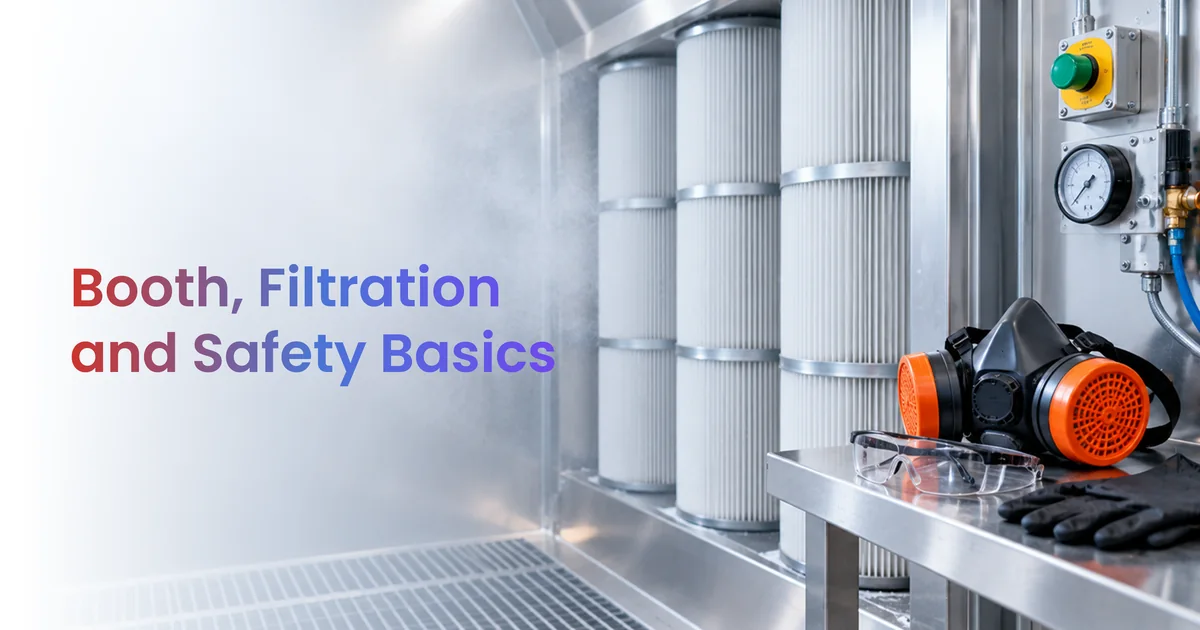
Powder is a combustible dust. In a commercial shop, that makes the booth and the safety plan part of the equipment list, not an afterthought.
Many new shops begin with a controlled spray corner and add a powder spray booth once volume picks up. Commercial booths follow NFPA 33, which calls for about 60 feet per minute of airflow across the booth opening for powder. Ovens that run in a commercial setting also need proper interlocks and ventilation, so involve your installer and local authority early. Our industrial spray booth buying guide covers sizing and filtration in more detail.
Your starting safety list:
- NIOSH-approved respirators, fit-tested for anyone who sprays. The OSHA respiratory protection standard covers selection and fit.
- Safety glasses, nitrile gloves and long sleeves.
- Rated fire extinguishers near the spray area and the oven.
- No ignition sources near the spray zone.
- Industrial safety supplies stocked before day one, not after the first scare.
Racks, Hooks and Masking
These small items quietly decide your throughput.
Hooks hold the part and carry the ground. A poor ground means weak wrap and rework. Stock C hooks and S hooks in several lengths, and keep spares, because cured powder builds up on them fast. A second rack set means one load cools and unloads while the next one cures, so the oven never sits idle. Round out the daily kit with our list of essential powder coating tools for daily production, and plan for upkeep with powder coating equipment maintenance tools every shop should stock.
For masking, use masking supplies rated for cure temperature. Our silicone caps are rated to 500°F and silicone plugs to 400°F. Regular tape fails at cure heat. For the full picture, see our high-temp masking guide.
The Non-Equipment Checklist
Equipment isn’t the only thing standing between you and your first paid job. Before you commit, work through this list:
- Zoning and permits. Confirm your location allows finishing operations.
- Fire marshal. Ask what they need to see for the oven, booth and powder storage.
- Insurance. Tell your insurer exactly what you plan to do.
- Electrical. Confirm capacity for the oven, compressor and lighting.
- Regulations. OSHA and environmental rules can apply to your shop. Check with your state and local agencies, and see the Powder Coating Institute for industry guidance.
- Powder storage. Keep it cool, dry and away from heat sources.
We’re not lawyers or inspectors, and rules differ by location. A short call to each office now saves a lot of backtracking later.
Want a second opinion on your startup equipment list before you order?
Our team at Creative Coating Solutions reviews your space, power and target jobs, then helps you build a phased list that fits.
|
Buy in This Order
- Confirm space, power and permits. Nothing gets ordered until these are settled.
- Order the oven. Lead time is the longest, so start the clock early.
- Set up air and application. Compressor, dryer, filter, gun, hopper.
- Build your prep station. Cabinet or blaster, degreaser, clean gloves.
- Stock hooks, racks and masking. Buy spares from the start.
- Put safety gear in place. Respirators, extinguishers, ventilation.
- Run test parts. Dial in kV, cure time and film thickness before real customers see your work.
Then, work. Keep a simple log of jobs you couldn’t take. That list tells you exactly which phase 2 and phase 3 equipment to buy next.
Already running a small operation and thinking about growth? Our guide on choosing powder coating equipment for small and mid-size shops picks up where this checklist ends.
Conclusion
Starting a powder coating business comes down to buying in the right order: oven first, then application, prep, racks, masking and safety. Add a booth and larger equipment when real jobs call for them.
Pair that equipment list with permits, insurance and a fire marshal visit, and you’ll avoid most first-year surprises. Keep a log of the jobs you can’t take. It tells you what to buy next.
Ready to build your list? Shop our powder coating equipment or talk to our team. We help new shop owners across the USA plan setups that fit their space, power and target customers.
FAQs
What equipment do I need to start a powder coating business?
You need a curing oven sized to your largest parts, a powder gun and hopper, a compressor with a dryer and filters, a blast cabinet or portable blaster, hooks and racks, high-temp masking supplies, and safety gear. Add a booth or controlled spray area as volume grows.
What size oven should I buy for a new powder coating shop?
Size it around the largest part you plan to coat, then add room for airflow. Compact ovens like 3x3x3 handle wheels and brackets. Larger interiors like 4x4x8 or 4x6x8 handle frames, gates and long parts. Buying slightly larger than you need avoids turning away jobs later.
Do I need a spray booth to start powder coating?
Not always on day one. Many new shops begin with a controlled spray area and add a booth as volume grows. Powder is a combustible dust, so confirm requirements with your local fire marshal and insurer. Commercial booths follow NFPA 33 airflow guidance of about 60 feet per minute.
What is the most important equipment in a powder coating shop?
The oven. It controls your part size, daily capacity and finish quality. Prep equipment comes a close second, because poor surface prep causes most coating failures. A quality gun on a poorly cured or poorly prepped part still produces a finish that fails.
How long does it take to get a powder coating oven?
Our economy electric ovens are built to order and usually ship in 4 to 5 weeks. Order before your space is ready so power, ventilation and layout are settled by the time it arrives. A licensed electrician should confirm your circuit beforehand.
Do I need permits to start a powder coating business?
Most likely yes, though requirements vary by city, county and state. Check zoning, fire marshal requirements, insurance conditions and any environmental rules before you buy equipment. A short call to each office usually clears this up quickly.
Should I buy a blast cabinet or a portable blaster first?
Choose by the work you plan to take. A blast cabinet suits wheels, brackets and small parts. A portable blaster suits large frames, gates and trailers. Many shops start with one and add the other as their customer mix becomes clear.
What safety gear do I need for a powder coating shop?
You need NIOSH-approved respirators, safety glasses, nitrile gloves, long sleeves and rated fire extinguishers near the spray area and oven. Keep ignition sources away from the spray zone, ventilate well, and follow OSHA guidance for respiratory protection and fit testing.