A powder burn-off oven is a high-temperature oven that removes cured powder coating from racks, hooks and metal parts. It heats the coating until it breaks down into ash and smoke, and an afterburner cleans the exhaust. Shops use it to strip racks and rework failed batches without chemicals.
Key Takeaways:
- A burn-off oven strips cured powder by heat, not by chemicals or abrasion.
- Racks and hooks are the most common loads, since buildup on them weakens the ground.
- Never use a curing oven for burn-off. It isn’t built for the smoke, heat or fire risk.
- Thin aluminum, galvanized parts and parts with rubber or plastic need extra care or another method.
- Safety standards, air permits and the fire marshal come into play before installation.
Look at your racks. If cured powder is built up on the hooks, your parts aren’t grounding well, your wrap is getting patchy and your rework pile is growing. Scraping them by hand takes hours. Soaking them in chemicals takes longer.
That’s the problem a burn-off oven solves. Here’s what it is, how it works, what belongs inside and what doesn’t, and how it compares with the other ways to strip powder. For the bigger picture of how ovens, booths, guns and air systems fit together in one shop, read our guide to powder coating equipment: ovens, booths, guns and air systems explained. If you’re ready to browse, see our powder burn-off ovens.
What is a powder burn-off oven?
A powder burn-off oven, also called a pyrolysis oven or stripping oven, is an industrial oven that removes cured powder coating by heating it until the polymer breaks down into ash and gas. A built-in afterburner then treats the smoke and exhaust gases. Shops use it to clean racks, hooks, fixtures and metal parts that carry coatings they need to remove.
How a Burn-Off Oven Works
The process is called pyrolysis. It heats the coating in a low-oxygen environment so it breaks down instead of catching fire. Here’s the typical sequence:
- Load. Racks, hooks or parts go in on a cart or hanging system.
- Heat up. The oven ramps to a temperature well above normal curing. Many units run roughly 750 to 900°F, depending on the design, so always follow the manufacturer’s specification.
- Break down. The cured powder softens, chars and turns to ash and gas.
- Treat the exhaust. An afterburner heats the smoke and fumes to destroy what the coating released.
- Cool down. The load cools before you open the door.
- Clean off the ash. Blasting, rinsing or brushing removes the residue.
Cycle time is measured in hours, not minutes. That’s why many shops run burn-off overnight or at the end of the day.
Our gas fired burn-off oven comes in a 6' x 7' x 8' size for racks and larger loads. Check the product page for current availability and ship time.
What You Can and Can’t Put Inside
Not every load belongs in a burn-off oven. Heat that clears powder can also warp or damage the wrong material.
Usually a safe fit:
- Steel racks and hooks
- Steel fixtures and hanging bars
- Heavy steel parts that need recoating
- Rejected parts with thick or failed coatings
Use caution or choose another method:
- Thin aluminum, which can warp or soften
- Galvanized parts, because the zinc coating reacts to the heat
- Parts with rubber, plastic, bearings or seals
- Cast parts or parts with trapped pockets
When in doubt, ask the oven manufacturer and your coating supplier before the first load. Test one non-critical part before you commit a full batch.
Wondering whether a burn-off oven fits the parts and racks you run?
Our team at Creative Coating Solutions helps shop owners match burn-off oven size and fuel type to the loads they strip each week.
Get your burn-off oven recommendation
|
Burn-Off vs Strip Tanks vs Blasting
A burn-off oven isn’t the only way to remove powder. Each method has a place.
Method
|
How it works
|
Best for
|
Watch out for
|
Burn-off oven
|
Heat breaks coating into ash
|
Racks, hooks, heavy steel in volume
|
Heat limits, permits, ash cleanup
|
Strip tank with chemicals
|
Chemical softens and lifts coating
|
Parts that can’t take high heat
|
Slow cycles, chemical handling and disposal
|
Media blasting
|
Abrasive removes coating
|
Small batches, spot removal
|
Labor, media use, part surface wear
|
Our powder stripping chemicals, pretreat and strip tanks page covers the chemical route. If you only need to clean a few small parts, a blast cabinet may be enough. Many shops end up using two methods, with burn-off for racks and heavy parts and chemicals or blasting for delicate ones.
When a Shop Needs One
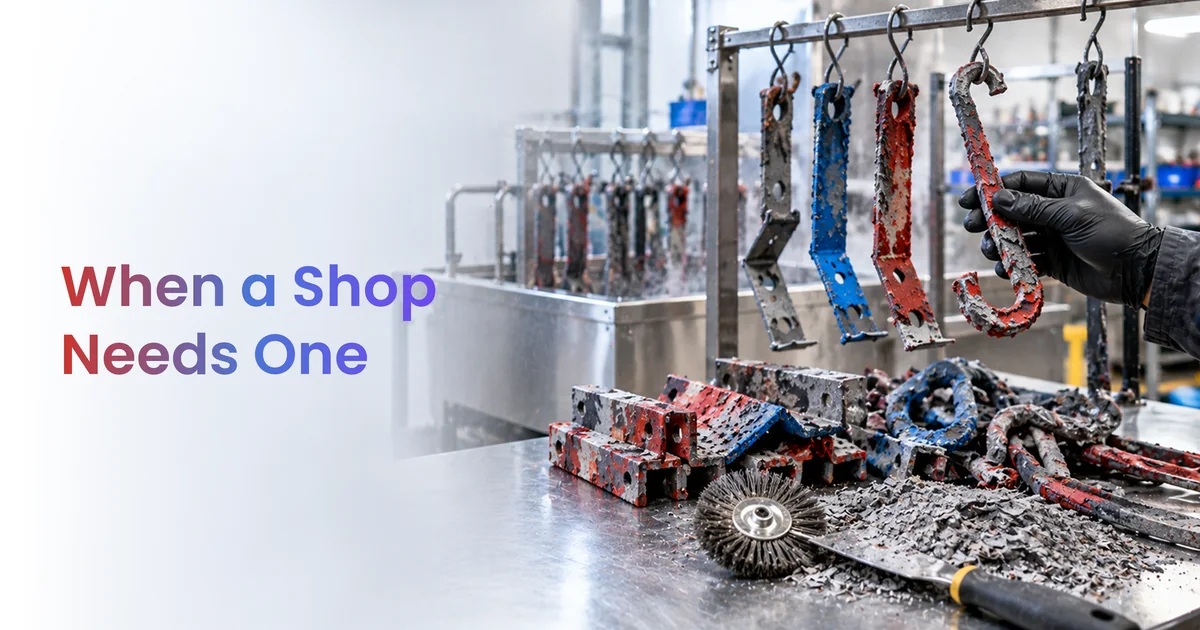
You probably don’t need a burn-off oven on day one. You’ll know when you do.
Your hooks keep losing their ground. Cured powder builds up on contact points. The ground weakens, wrap gets patchy, and you’re chasing coverage problems that start at the rack.
Rejected parts are stacking up. A batch fails inspection with a thick coat of the wrong color or a failed cure. You need the coating off fast so the part can go through again.
Hand scraping is eating your week. Someone spends hours with a wire wheel or a scraper on racks that should take no attention at all. Those tools belong in your essential powder coating tools for daily production, but they shouldn’t be your stripping plan.
Chemical stripping can’t keep up. Tanks work, but cycles are slow, and a growing volume of racks outpaces what you can soak.
If that sounds familiar, our guide to common powder coating defects and how to fix them covers the failures that lead to rework in the first place.
Tired of scraping racks and reworking rejected parts by hand?
Our team at Creative Coating Solutions helps shops plan a stripping setup that matches their rack volume, part types and floor space.
|
Safety, Permits and Placement
A burn-off oven handles high heat, smoke and combustible coatings. Treat the safety plan as part of the purchase.
- Standards. Industrial ovens and furnaces are generally covered by NFPA 86. Your installer and local authority can confirm what applies to your setup.
- Air quality. Smoke and emissions can fall under state or local air rules. Ask about permits before you order.
- Placement. Keep the oven away from powder storage, spray areas and anything flammable. Leave clearance around it for heat and service access.
- Fire protection. Keep rated fire extinguishers nearby and review your industrial safety gear before first use.
- Never substitute. A standard curing oven isn’t designed to run burn-off cycles. Read our breakdown of curing oven vs powder coat oven to see why.
We’re not inspectors, and rules differ by location. A short call to your fire marshal and air quality office before purchase saves headaches later.
What to Check Before You Buy
Run through this list before you pick a model:
- Load size. Measure your largest rack or part and add clearance.
- Fuel type. Match the oven to the gas or electric service you can install.
- Afterburner and controls. Confirm what comes standard and how the cycle is controlled.
- Cycle length. Ask how long a typical load takes, including cooldown.
- Ash cleanup. Plan where the ash goes and how you’ll clean the load afterward. Our guide to powder coating equipment maintenance tools every shop should stock covers the brushes, scrapers and cleanup gear that keep racks and ovens in shape.
- Install needs. Check venting, clearances, utilities and local inspection steps.
- Lead time. Confirm availability before you plan your project date.
Our burn-off ovens page lists what’s currently available. If you also need curing capacity, see our gas fired ovens and industrial powder coat curing ovens.
Not sure which burn-off oven, fuel type or size fits your shop?
Our team at Creative Coating Solutions reviews your racks, part sizes and utilities, then recommends a setup that fits. We help shops across the USA plan stripping and curing equipment together.
|
Conclusion
A powder burn-off oven strips cured powder with heat, which makes it a practical tool for racks, hooks and heavy steel. It saves hand scraping and speeds up rework.
It also brings real responsibilities: material limits, safety standards and air permits. Check those before you buy, and never swap in a curing oven for the job.
Ready to explore your options? Browse our powder burn-off ovens or talk to our team and we’ll help you match the oven to your racks, parts and utilities.
FAQs
What is a powder burn-off oven used for?
A powder burn-off oven removes cured powder coating from racks, hooks, fixtures and metal parts. It heats the coating until it breaks down into ash and gas, and an afterburner treats the exhaust. Shops use it to clean racks and rework rejected parts.
How does a powder coating burn-off oven work?
It uses pyrolysis. The oven heats the load in a low-oxygen environment, so the coating breaks down into ash instead of burning freely. An afterburner then destroys smoke and fumes. After cooling, you blast or rinse off the ash and the metal comes out clean.
What temperature does a burn-off oven run at?
Many units run roughly 750 to 900°F, which is well above normal powder cure temperatures. Exact settings depend on the oven design, the coating and the load. Always follow the manufacturer’s specifications and your coating supplier’s guidance for the parts you strip.
Can I use my curing oven to burn off powder?
No. A curing oven isn’t built for the temperatures, smoke or fire risk of burn-off cycles. Running one that way can damage the oven and create a serious hazard. Use a purpose-built burn-off oven, or choose chemical stripping or blasting instead.
What materials can go in a burn-off oven?
Steel racks, hooks, fixtures and heavy steel parts are the usual loads. Use caution with thin aluminum, galvanized parts, and anything with rubber, plastic or seals. Ask the oven manufacturer and your coating supplier first, and test one non-critical part before running a full batch.
How long does a burn-off cycle take?
Cycles usually run for several hours, including heat-up, burn-off and cooldown. The exact time depends on the load size, coating thickness and oven design. Many shops run burn-off at the end of the day so racks are clean by morning.
Is a burn-off oven better than chemical stripping?
It depends on the work. Burn-off is faster for racks, hooks and heavy steel in volume. Chemical stripping suits parts that can’t take high heat. Many shops use both. Blasting handles small batches and spot removal. Choose by part type, volume and your permit situation.
Do I need a permit for a burn-off oven?
Possibly. Smoke and emissions can fall under state or local air quality rules, and fire codes may apply to the installation. Contact your fire marshal and local air authority before you order. Your installer can also tell you which standards, such as NFPA 86, usually apply.