High temperature masking for powder coating uses three main product types: silicone caps for tube ends and bolt heads, tapered silicone plugs for threaded holes and blind holes, and high temp polyester tape for flat surfaces and curved edges. Each serves a different job on the part. Silicone caps and plugs withstand up to 500°F and can stay in through the full cure cycle. Polyester tape handles up to 400°F and should be removed after the part cools.
Key Takeaways
- Silicone caps, tapered plugs, and high temp polyester tape are not interchangeable. Each solves a different masking problem on a different part feature.
- High temperature silicone masking products withstand up to 500°F, which covers all standard powder coating cure temperatures with headroom to spare.
- Polyester masking tape handles up to 400°F for cure cycles of 20 minutes. For higher temperatures or extended dwell times, polyimide tape handles up to 500°F.
- Threads masked with a tapered pull plug come out clean and don't need chasing after the cure. Skip the plug and you're chasing threads on every batch.
- Silicone caps and plugs are reusable through multiple cure cycles. Proper cleaning and storage extends their life significantly in high-production shops.
Here's a problem that repeats itself in powder coating shops across the USA more often than it should.
You pull a part out of the oven and the threads are loaded with powder. Now you've got two choices. Chase the threads and risk damaging them, or strip the part and redo it from scratch. Either way, you just lost time and money on a job that was one $0.30 silicone plug away from coming out perfect.
Masking isn't glamorous. Nobody talks about it the way they talk about guns or ovens. But bad masking decisions, wrong product for the application, wrong size, wrong timing for removal, cause more rework in powder coating shops than most operators want to admit.
We carry the full range of high temperature masking solutions at Creative Coating Solutions, from silicone caps and plugs through to high temp tape in multiple widths. This guide breaks down which product does what, how to size them correctly, and when to use each one so you stop losing time to masking problems on every batch.
What is high temperature masking for powder coating?
High temperature masking refers to caps, plugs, and tape products specifically rated to withstand powder coating cure temperatures of 325-450°F without melting, leaving residue, or allowing powder to creep underneath. Standard masking tape burns, shrinks, or leaves adhesive residue at these temperatures. High temp masking products, typically made from silicone rubber or polyester film with silicone adhesive, survive the full cure cycle and remove cleanly without damaging the substrate surface.
Silicone Caps: What They Do and When to Use Them
Silicone caps are exactly what they sound like. They slip over external features on a part to protect them from powder during application and from heat during the cure cycle.
Tube ends, bolt heads, studs, nipples, fittings, and any external protrusion you need to keep clean are where silicone caps shine. They grip the outside diameter of the feature and create a seal that keeps powder out during the spray pass.
High temperature silicone masking caps are rated to 500°F, which gives you significant headroom above the 375-400°F standard powder coating cure temperature. They're flexible enough to slip on and off quickly, which matters when you're masking 50 parts before a production run.
A few practical points on using silicone caps correctly:
Fit matters more than most operators think. A cap with an inside diameter that matches the outside diameter of your tube or stud exactly will work. But a cap 0.030 inches smaller than your tube's outside diameter actually seats better because the silicone stretches slightly and grips rather than just sitting on the feature. It won't pop off in the spray booth from air turbulence.
Caps are reusable through many cycles. Silicone caps don't harden or become brittle at standard powder coating cure temperatures the way EPDM or vinyl products can. After the cure cycle, pull the cap off, clean any stray powder off the surface, and store them in a bin sorted by size. Shops running production work get significant reuse out of quality silicone caps, which makes the per-cap cost much lower in practice than it looks at first glance.
Check the cap fits over any shoulders or flanges. If the feature you're masking has a flange or shoulder behind it, the cap needs clearance to seat past that feature and seal on the part surface behind it. Measure before you order.
Creative Coating Solutions carries silicone caps for powder coating in a full range of sizes for shops across the USA. If you're not sure which size fits your most common part features, order a sizing kit first rather than buying bulk in a size that doesn't fit right.
Silicone caps protect external features like tube ends, bolt heads, studs, and fittings from powder during application and from heat during the cure cycle. They're rated to 500°F, slip on and off quickly, and are reusable through many cure cycles. A silicone cap with an inside diameter 0.030 inches smaller than the tube outside diameter creates a snug grip that stays in place through both the spray booth and the oven.
Tapered Plugs and Pull Plugs: Protecting Threads and Holes
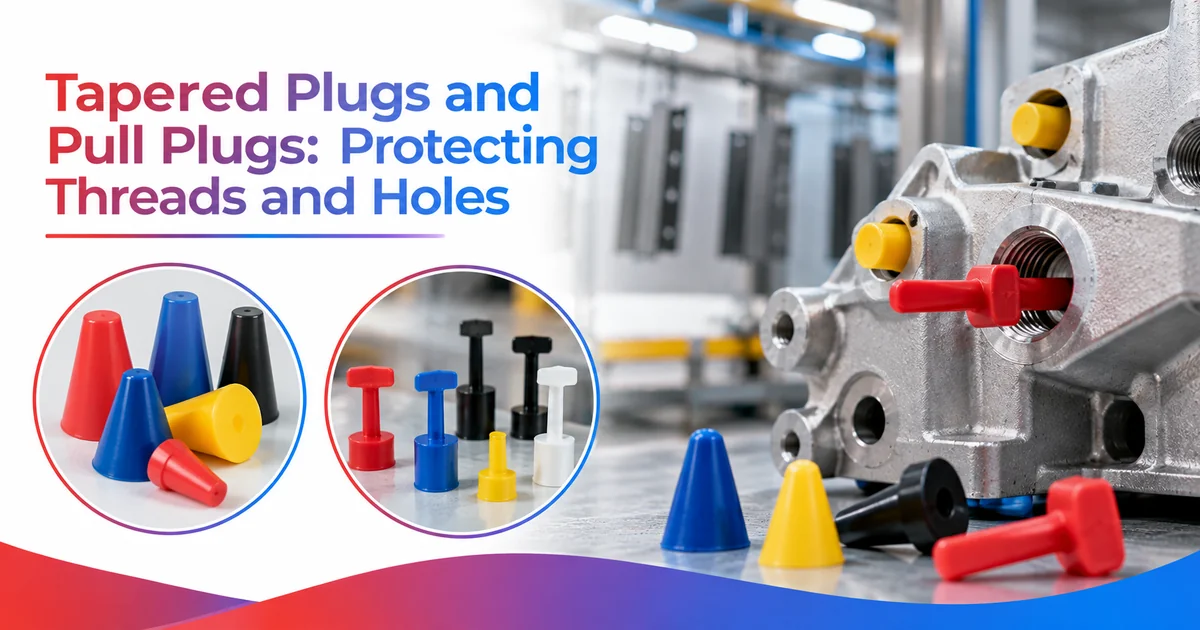
This is where most shops save the most rework time once they get their masking setup right.
Threaded holes are the most common masking challenge in powder coating. Powder that gets into a threaded hole during application bakes hard during the cure cycle. Now you're running a tap through every hole before the part can be assembled. In production, that adds minutes per part and creates the risk of damaging the thread on a finished part.
A tapered silicone plug inserted into the threaded hole before coating solves this completely. The plug fills the hole, the powder can't get in, and the part comes out with clean threads ready for assembly.
Tapered plugs vs pull plugs: what's the difference?
Tapered plugs are solid or hollow silicone cones that compress as they're pushed into the hole. The taper means one plug fits a range of hole diameters, which reduces the number of different sizes you need to stock. They're pushed in by hand and pulled straight out after the part cools.
Pull plugs have a flat tab or pull ring attached to make removal faster and easier, especially on parts with deep or recessed holes where your fingers can't get a grip on a standard tapered plug. For production work where you're pulling masks off hundreds of parts per shift, pull plugs save a surprising amount of time.
Both types are rated to 500°F in silicone and can be reused through multiple cycles.
Sizing tapered plugs correctly:
The plug needs to create a seal at or just below the first thread of the hole. Too small and powder seeps in around the plug. Too large and you can't seat it deep enough to seal properly.
A general rule: the plug's major diameter should match the nominal hole diameter. A 1/2-inch threaded hole needs a plug sized for approximately 1/2-inch holes. The taper handles small variations. When in doubt, go one size up, since you can always compress a slightly larger plug into the hole but a too-small plug won't seal.
Read More: Common Powder Coating Defects and How to Fix Them
What is the difference between a tapered plug and a pull plug for powder coating?
A tapered plug is a solid or hollow silicone cone pushed into a hole by hand. It fits a range of diameters due to its taper and is removed by pulling straight out. A pull plug has an attached tab or ring for faster removal, which makes it more practical for production work where masking and unmasking time matters. Both are rated to 500°F in silicone and reusable through many powder coating cure cycles.
High Temp Masking Tape: Polyester vs Polyimide
Tape is your go-to for flat surfaces, curved edges, large areas, and anywhere a silicone cap or plug doesn't fit neatly. But using the wrong tape at the wrong temperature causes more problems than it solves.
Here's a practical breakdown of the two main high temperature tape types for powder coating:
Green polyester tape (standard choice)
Green polyester tape is the industry standard for powder coating masking across the USA. It's made from a polyester film backing with a silicone pressure-sensitive adhesive. It withstands up to 400°F for a standard 20-minute cure cycle and removes cleanly without leaving adhesive residue.
It's translucent, which is a practical advantage: you can see through it to check alignment on critical masking lines. It cuts cleanly with a razor blade, conforms reasonably well to gentle curves, and is the most cost-effective tape option for general-purpose masking.
For the vast majority of standard powder coating work at 375-400°F, green polyester tape handles the job.
Polyimide tape (high temperature choice)
When your cure temperature goes above 400°F, or your dwell time extends beyond a standard 20-minute cycle, polyester tape starts to show its limits. The backing can shrink slightly at higher temperatures, which pulls the masking edge and creates a wavy or lifted line.
Polyimide tape (sometimes called Kapton tape in the industry) handles up to 500°F and stays dimensionally stable at extended cure times. It doesn't shrink, curl, or lift at temperatures that cause polyester to move. It's more expensive than green polyester tape but is the correct choice for high-temperature specialty powders that cure above 400°F.
Tape Type
|
Max Temperature
|
Best For
|
Removes Clean?
|
Green polyester
|
400°F
|
Standard powder coating, 20-min cure
|
Yes
|
Blue polyester
|
400°F
|
Curved surfaces, better conformability
|
Yes
|
Polyimide (amber)
|
500°F
|
High-temp powders, extended cure times
|
Yes
|
One critical rule for all high temp tape: the surface must be clean and dry before you apply it. Any oil, dust, or moisture under the tape lets powder creep underneath and ruins your masking line. Wipe the masking area with a clean dry cloth right before you apply tape, and press the edges down firmly.
What tape do you use for powder coating?
Green polyester masking tape is the industry standard for powder coating in the USA. It withstands 400°F cure temperatures for 20-minute cycles, removes cleanly without residue, and is cost-effective for production use. For cure temperatures above 400°F or extended dwell times, polyimide tape handles up to 500°F and stays dimensionally stable where polyester tape can shrink and lift. Blue polyester tape is an alternative for parts with curved or uneven surfaces where better conformability is needed.
How to Size Silicone Caps and Plugs Correctly
Getting sizing right the first time saves you a return shipment and a production delay. Here's how to measure for the two main product types.
Sizing silicone caps:
Measure the outside diameter of the feature you're capping. That's your reference number. For a snug fit that grips reliably, look for a cap with an inside diameter approximately equal to or slightly smaller than your feature's outside diameter. The silicone stretches to the grip.
For tube ends: measure the tube's outside diameter. For bolt heads: measure across the flats of the bolt head, not the point-to-point measurement.
Sizing tapered plugs:
Measure the inside diameter of the hole you're masking. For threaded holes, use the nominal thread diameter. A 3/8-16 threaded hole uses a plug sized for approximately 3/8-inch diameter. A 1/2-13 threaded hole uses a plug for approximately 1/2-inch.
For blind holes and smooth-bore holes, measure the actual hole diameter with a caliper and match to the nearest plug size that seals at or just inside the hole opening.
When you're unsure: order an assortment kit first
For shops just setting up their masking program, a silicone cap and plug kit lets you identify which sizes you actually use on your most common parts before buying in bulk. Creative Coating Solutions carries a Silicone Cap And Plug Kit for exactly this purpose. on your most common parts before buying in bulk. This approach is faster and cheaper than guessing at individual sizes and getting it wrong.
Read More: Powder Coating vs Paint: Which Finish Lasts Longer?
Timing: When to Apply and When to Remove Masking
This is the detail most guides skip. And it's where masking either works cleanly or causes problems.
When to apply tape:
Apply high temp polyester tape to a clean, dry, degreased part immediately before coating. Don't apply tape to a part that's been hanging in the spray area picking up ambient powder dust. Press the tape edges down firmly with a finger or burnishing tool. Edges that aren't fully seated let powder creep underneath and ruin your masking line.
Apply silicone caps and plugs at the same time. Work through the part systematically so you don't miss any masking point before it goes in the booth.
When to remove masking:
Silicone caps and plugs can stay in through the full cure cycle. Remove them after the part cools to a safe handling temperature. Silicone won't bond to the powder coating finish during cure, so removal stays clean.
Polyester tape is best removed while the part is still slightly warm, not fully cooled. The adhesive releases more cleanly at 100-150°F than it does on a fully cold part. Don't pull the tape too early when the powder is still soft, or you'll smear the finish edge. The right window is after the powder has fully flowed and cured but while the part still has some residual warmth.
For two-tone work where you're masking a cured coat before applying a second color, remove the masking after the first coat is fully cured and cooled. Then re-mask before the second application.
When should you remove masking tape after powder coating?
Remove high temp polyester tape while the part still has residual warmth, typically in the 100-150°F range after coming out of the cure oven. This gives cleaner adhesive release than pulling tape off a fully cold part. Don't pull tape while the powder is still soft and uncured. Silicone caps and plugs can stay in through the full cure cycle and be removed after the part cools completely, since silicone doesn't bond to cured powder coating.
Not sure which masking products you actually need for your part types and production volume?
Our team at Creative Coating Solutions helps shops across the USA build out their complete masking supply program.
|
Common Masking Mistakes That Cost Shops Time
Here are the mistakes we see consistently in shops across the USA that are losing production time to masking problems:
Using regular masking tape instead of high temp tape
Standard blue painter's tape or general-purpose masking tape melts, burns, and leaves adhesive residue in the oven at powder coating cure temperatures. The residue contaminates the oven and can cause fisheye defects in subsequent batches. High temp polyester tape rated to 400°F is the minimum for any powder coating masking application.
Guessing at plug sizes instead of measuring
A plug that's too small for the hole doesn't seal. Powder gets in anyway and you're back to chasing threads. Take 30 seconds to measure the hole diameter with a caliper and order the correct size. Your thread-chasing time after a failed masking job costs far more than a correctly sized plug.
Pulling masking tape too late on a fully cold part
Tape adhesive gets stiffer as parts cool. Waiting until the part is room temperature makes the tape harder to pull cleanly. You get more adhesive residue left on the surface and more risk of chipping the powder edge when you strip the tape. Pull tape in that warm window after cure, not after the part has been sitting out for an hour.
Not cleaning the surface before applying tape
Oil, fingerprints, or dust under the tape edge lets powder creep in and ruin your masking line. Wipe the masking area clean right before you tape it. This is the single most common cause of tape-related masking failures and it's completely preventable.
Reusing silicone caps that are hardened or cracked
Silicone caps and plugs are reusable, but they don't last forever. A cap that's gone hard or developed cracks won't seat properly and won't seal. Inspect your reusable masking products regularly and replace them when they show wear. The replacement cost is negligible compared to rework time on a batch with failed masking.
Why is powder getting under my masking tape?
Powder creeping under masking tape almost always comes from one of three things: the surface wasn't clean and dry when you applied the tape, the tape edges weren't pressed down firmly, or the tape wasn't rated for the cure temperature and shrank or lifted in the oven. Use high temp polyester tape rated to at least 400°F, wipe the surface clean immediately before applying, and press all edges firmly before the part goes in the booth.
Conclusion
Good masking is the part of powder coating that separates shops running clean, efficient production from shops chasing threads and recoating parts every week.
Silicone caps protect your tube ends, bolt heads, and external features. Tapered plugs and pull plugs keep powder out of threaded holes and bores. High temp polyester tape covers flat surfaces and edges where caps and plugs don't reach. Each product has a specific job, and getting the right one for each feature on your part is what keeps rework rates low.
The details matter too. Measure before you order. Clean the surface before you tape. Pull masking at the right temperature. Inspect your reusable silicone products and replace anything that's gone hard or cracked. These habits take minutes and save hours.
Creative Coating Solutions stocks a complete line of powder coating masking supplies, including silicone caps, tapered plugs, pull plugs, C-hooks, V-hooks, and high temp tape in multiple widths. Everything ships fast across the USA from Fenton, Missouri.
Call (618) 741-0740 or email scott@creativecoatingsolutions.com if you need help selecting masking products for specific part features or want to build out a complete masking supply kit for your production needs.
FAQs
What is the difference between silicone caps and silicone plugs for powder coating?
Silicone caps fit over external features like tube ends, bolt heads, and studs. They protect the outside of a feature. Silicone plugs, including tapered and pull plugs, fit inside holes, threaded openings, and bores to keep powder out of the interior. Both are rated to 500°F in quality silicone and are reusable through many cure cycles. The right product depends on whether you're masking an external feature or an internal one.
Does Creative Coating Solutions sell high temperature masking supplies across the USA?
Yes. Creative Coating Solutions is a veteran-owned supplier based in Fenton, Missouri that stocks silicone caps, tapered plugs, pull plugs, high temp polyester tape, and other powder coating masking supplies for shops across the USA. Everything ships fast from Fenton, Missouri. Call (618) 741-0740 or email scott@creativecoatingsolutions.com for product availability.
Can silicone caps and plugs be reused for powder coating?
Yes. High temperature silicone masking products are designed for multiple reuse cycles. Silicone doesn't harden, crack, or bond to powder coating at standard cure temperatures up to 500°F. After each use, remove any stray powder from the cap or plug surface, inspect for cracks or hardening, and store sorted by size. Replace any piece that shows signs of wear, cracks, or loss of flexibility. In production shops, quality silicone masking products routinely last through dozens of cure cycles.
What high temp masking tape should I use for powder coating?
Green polyester tape rated to 400°F is the industry standard for most powder coating work across the USA. It removes cleanly, cuts precisely, and handles standard 375-400°F cure cycles for 20 minutes. For powders curing above 400°F or with extended dwell times, switch to polyimide tape rated to 500°F. Blue polyester tape is an alternative for curved surfaces where better conformability is needed.
Why are my threads getting coated even with masking plugs in place?
Threads getting coated through a plug almost always means the plug is undersized for the hole. A plug that doesn't fill the hole to the first thread lets powder seep in around the sides. Measure the thread's nominal diameter with a caliper and size your plug to match. The plug should create a seal at or just below the first thread, not sit loosely in the opening. If you're using a tapered plug, seat it firmly by hand until it stops compressing.
What temperature rating do I need for powder coating masking supplies?
High temperature masking products for powder coating need to handle your oven's cure temperature, typically 325-450°F, with safety margin. Silicone caps and plugs rated to 500°F provide ample headroom above standard cure temperatures. High temp polyester tape rated to 400°F covers most standard powder coating work. If you're curing specialty powders above 400°F, use polyimide tape rated to 500°F. Never use standard vinyl, rubber, or paper masking products in a powder coating oven.
How do I mask a tube or pipe end for powder coating?
Select a silicone cap with an inside diameter approximately equal to or slightly smaller than the tube's outside diameter. The slight interference fit creates a grip that holds through the spray booth without blowing off from air movement. Press the cap on firmly until it seats flat against the tube end. For long tubes where a standard cap doesn't cover the full area needed, combine a cap at the end with a length of silicone tubing rolled over the outside of the tube to extend coverage.
Can I use regular tape for powder coating masking?
No. Standard masking tape, painter's tape, and general-purpose plastic tape are not rated for powder coating cure temperatures. At 375-400°F, regular tape burns, melts, or leaves adhesive residue on the part and inside your oven. Adhesive contamination in the oven causes fisheye defects in subsequent batches. Always use high temp polyester tape rated to at least 400°F for any powder coating masking application.