Powder coating lasts significantly longer than paint. A properly applied powder coat finish can last up to 20 years outdoors before needing to be redone, while liquid paint on metal often needs recoating every 2 to 4 years. Powder coating bonds through an electrostatic and heat-cure process that creates a thicker, denser finish resisting chipping, UV fading, moisture, and corrosion far better than conventional paint.
You've got a metal part that needs a durable finish. And you're stuck choosing between powder coating and paint.
It seems like a simple call. But get it wrong and you're either repainting the same parts every couple of years or investing in equipment without fully understanding the process first.
Shops and manufacturers across the USA face this decision constantly. The finish you choose affects how long your parts last, how your operation runs day to day, and what environmental compliance requirements you need to meet.
Here's what we'll cover. We'll break down how each process works, compare both on durability, environmental impact, and applications, and tell you exactly when one makes more sense than the other. By the time you finish reading, you'll know which finish fits your work and what powder coating equipment and powder coating supplies you need to get started if powder is the right call.
Key Takeaways
- Powder coating lasts up to 20 years outdoors, while liquid paint on metal typically needs recoating every 2 to 4 years.
- Powder coating bonds to metal through a heat-cure process that creates a finish far tougher than conventional liquid paint.
- Powder coating produces near-zero VOC emissions, making it the EPA-recommended choice for environmentally responsible shops.
- Liquid paint requires more frequent recoating, which adds material and labor costs over the life of any part or structure.
- Shops across the USA can get started with a complete powder coating equipment package covering ovens, booths, guns, and supplies.
What is powder coating?
Powder coating is a dry finishing process where electrostatically charged powder particles are sprayed onto a grounded metal surface, then cured in an oven at 350 to 450 degrees Fahrenheit. The heat melts the powder and causes it to flow and bond into a hard, uniform finish. It's used widely across the USA in automotive, architectural, industrial, and commercial applications because it creates a finish that's tougher and longer-lasting than conventional liquid paint.
How Each Process Actually Works
Understanding why one finish outlasts the other starts with how each one is actually applied. Most people assume they're basically the same process with different materials. They're not.
The Liquid Paint Process
Liquid paint is applied wet, either by brush, roller, or spray gun. It contains pigments, resins, and solvents. The solvents evaporate as the paint dries, leaving the color and protective layer behind.
The problem is that drying is not the same as curing. Liquid paint sits on top of the metal surface rather than bonding deeply to it. That's why it chips, scratches, and peels under impact or extended weather exposure.
Multiple coats are often needed for adequate protection. And each coat needs to dry fully before the next one goes on. For metal parts in high-use industrial settings across the USA, that process still produces a finish that wears down faster than powder.
The Powder Coating Process
Powder coating starts with surface preparation. The metal is cleaned and typically blasted to create a profile for adhesion. Then an electrostatic spray gun applies dry powder particles to the grounded part.
Because the particles carry an electrostatic charge, they wrap around edges and coat complex shapes more evenly than liquid paint can.
Then the part goes into a curing oven for powder coating. At cure temperature, the powder melts, flows, and cross-links chemically into a solid, continuous film. It's not just sitting on the surface. It's bonded to it.
That's the core reason powder coating lasts longer. The bond is fundamentally stronger.
Does powder coating bond better than paint?
Yes, directly. Powder coating bonds to metal through a combination of electrostatic adhesion during application and chemical cross-linking during the heat cure process. This creates a finish that's denser and more adhesive than liquid paint, which relies on mechanical adhesion and solvent evaporation. The result is a coating that resists impact, chemicals, UV exposure, and moisture far better than conventional paint in any application across the USA.
Read More About: Industrial Powder Coating Equipment: How to Build a Sustainable ROI Case for Your Shop
Durability Head-to-Head: Powder Coating vs Paint
This is where the real difference shows up. Let's get specific rather than vague.
How Long Does Powder Coating Last?
When correctly applied to properly prepared metal, powder coating can last up to 20 years in direct outdoor UV exposure, according to data from finishing industry manufacturers. With regular cleaning and minimal maintenance, it can last even longer indoors or in protected environments.
Polyester powders, the most common type used in shops across the USA, offer the highest resistance to chalking and UV breakdown. High temperature powder coatings used in engine components and industrial equipment hold up at temperatures that would destroy conventional paint finishes entirely.
How Long Does Paint Last on Metal?
Painted metal surfaces exposed to outdoor conditions typically need recoating every 2 to 4 years. In harsh climates with heavy UV exposure, salt air, or extreme temperature swings, that timeline can be shorter.
Paint fades, chips at edges and impact points, and allows moisture to creep under the film where it starts corroding the metal underneath. Once corrosion starts under paint, the damage spreads faster than most people account for when planning maintenance schedules.
Here's a direct side-by-side comparison:
Factor | Powder Coating | Liquid Paint |
Outdoor lifespan | Up to 20 years | 2 to 4 years |
UV resistance | Excellent, resists chalking | Fades and chalks over time |
Impact resistance | High, flexes without chipping | Chips under impact |
Corrosion resistance | Strong barrier coating | Degrades at chips and scratches |
Finish consistency | Even coverage, no drips | Can drip, run, or apply unevenly |
Recoat frequency | Rarely needed | Every 2 to 4 years outdoors |
Touch-up ease | Requires full reprocess | Easy to spot-repaint in the field |
The only area where paint has a practical advantage is spot touch-up work. If a small area gets damaged after installation, you can brush or spray it in the field without sending the part back through a full process. For most commercial and industrial applications across the USA, that single advantage doesn't outweigh the durability gap.
Not sure what powder coating equipment your shop actually needs?
Our team at Creative Coating Solutions helps shops across the USA pick the right setup for their volume and part types.
|
Environmental Impact: VOCs, Waste, and EPA Compliance
This is a genuine differentiator between the two processes. Not just a marketing point.
Liquid paint, especially solvent-based paint, releases volatile organic compounds (VOCs) into the air during application and drying. VOCs contribute to air pollution and pose health risks to workers, including respiratory issues. The EPA regulates VOC emissions from coating operations, and compliance requirements have tightened across the USA in recent years.
Powder coating produces near-zero VOC emissions. Because the coating is applied as a dry powder with no liquid solvents, there's nothing to evaporate into the air. The Powder Coating Institute confirms that powder coatings contain no solvents and release negligible, if any, polluting VOCs into the atmosphere.
The EPA itself recommends powder coating as a sustainable coating option for industrial applications.
Three practical environmental advantages for shops switching to powder:
- No hazardous waste disposal requirements for solvent containers or paint sludge
- Lower fire risk from flammable liquid storage and application
- Improved air quality for workers inside the shop during production hours
For shops across the USA looking to pass environmental inspections or meet sustainability requirements from customers, powder coating reduces compliance burden significantly compared to solvent-based paint systems.
Is powder coating better for the environment than paint?
Yes, in most cases. Powder coating produces near-zero volatile organic compound (VOC) emissions because no liquid solvents are used in the process. The EPA recommends powder coating as a sustainable industrial coating option. Liquid paint, particularly solvent-based paint, releases significant VOCs during application and drying. These VOCs contribute to air pollution and require more careful compliance management under EPA regulations across the USA.
Where Powder Coating Outperforms Paint
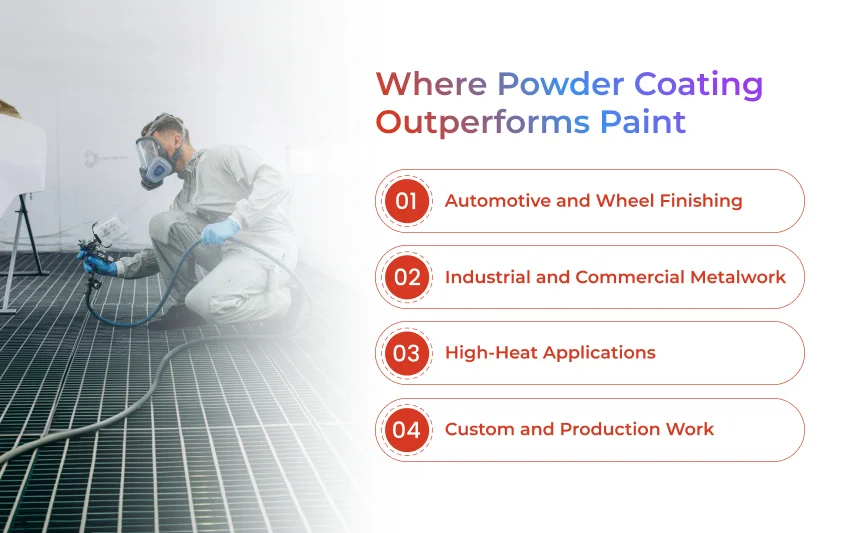
Some applications are so demanding that paint simply doesn't hold up long enough to be practical. Shops across the USA working in these areas typically find the switch to powder coating pays off quickly.
Automotive and Wheel Finishing
Wheels face constant road debris, brake dust, chemicals, and temperature changes. Powder-coated wheels hold their finish far longer than painted wheels under the same conditions. Shops doing wheel refinishing work find that powder coating reduces callbacks and quality complaints compared to paint.
Industrial and Commercial Metalwork
Fencing, shelving, structural components, gates, and outdoor furniture all benefit from powder coating because they face continuous weather exposure. Metallic powder coatings and architectural powder coatings provide both the color options and the durability needed for these applications across the USA.
High-Heat Applications
High temperature powder coatings are formulated to withstand operating temperatures that liquid paint can't handle. Engine components, exhaust headers, grills, and industrial equipment that sees elevated temperatures are far better candidates for specialty coatings than paint.
Custom and Production Work
Custom powder coatings give fabricators and job shops the ability to offer a wide range of colors and finishes including gloss, matte, satin, metallic, and textured options. The finish quality stays consistent from part to part in ways that hand-applied paint simply can't match on a production line.
What surfaces can be powder coated?
Metal is the primary surface for powder coating because it conducts electricity, which is needed for the electrostatic application process. Steel, aluminum, stainless steel, and most ferrous and non-ferrous metals can be powder coated. Some specialty processes allow powder coating on certain plastics and MDF using pre-heat methods, but metal remains the most common and reliable application. Surfaces that can't hold an electrostatic charge, like standard wood and most plastics, are not suitable for conventional powder coating.
When Paint Still Makes Sense
Powder coating isn't the right choice for every situation. Here's when paint is the more practical option.
- Heat-sensitive materials - Wood, plastic, and composite materials that can't withstand 350 to 400 degree oven temperatures can't be powder coated using conventional methods
- Small field repairs - If a part is already installed and needs a spot touch-up, paint is practical where powder coating isn't
- Very thin coatings required - Some applications need a coating thickness that powder can't go below practically
- Non-metal substrates - Anything that can't be grounded for electrostatic application needs liquid paint or an alternative method
- Low-volume one-off work - If you're finishing one or two pieces with no plans to repeat, the setup involved in powder coating may not make sense over a quick paint job
Knowing the limits of each process helps you make the right call per job instead of forcing one method onto every application.
Can you powder coat over paint?
Powder coating over existing paint is not recommended. The heat required to cure powder coating, between 350 and 450 degrees Fahrenheit, will burn and blister most liquid paint finishes. This contaminates the powder coat layer and causes adhesion failures. For best results, existing paint should be stripped down to bare metal before powder is applied. Sandblasting is the most effective method for preparing previously painted metal for powder coating.
Read More About: How Powder Coating Equipment Pays for Itself in Production
What You Need to Start Powder Coating
If this comparison has you thinking about adding powder coating to your shop or starting a coating operation from scratch, here's what a complete setup involves. Shops across the USA typically need these 7 core components working together.
1. Surface prep equipment
An abrasive blast cabinet or blasting system cleans and profiles metal before coating. This step is where most beginners cut corners. Don't. Surface prep is the single biggest factor in whether your finish lasts or fails early.
2. Electrostatic powder coating spray gun
The gun applies charged powder to the grounded part. Entry-level guns work well for small shops and hobbyists. Higher-output guns suit production environments running multiple batches per day.
3. Powder coating spray booth
A powder coating spray booth captures overspray and keeps your application area clean and safe. A proper booth also protects your workers from powder inhalation during application.
4. Curing oven
The oven is the most critical piece of your setup. It needs to reach and hold 350 to 450 degrees consistently across the full cure cycle. Creative Coating Solutions offers electric and gas curing ovens for powder coating in multiple configurations sized for small shops through to large production operations.
5. Air compressor
Industrial air compressors supply clean, dry air to your powder gun and pneumatic tools. Moisture in the air line causes coating defects and adhesion issues. A properly sized compressor with a moisture filtration system is non-negotiable for consistent results.
6. Masking supplies
Masking supplies including plugs, caps, and tape protect threads, holes, and surfaces that shouldn't receive coating. Getting masking right saves significant cleanup and rework time on every batch.
7. Powder coating supplies and accessories
The powder itself, hooks, racks, andpowder coating accessories to hang and position parts correctly in the oven. Industrial powder coatings come in hundreds of colors and finish types. Having the right supplies on hand keeps your production moving without delays.
Want This Handled For You?
Not sure what equipment package fits your shop size and production volume? Our team puts together complete powder coating system recommendations based on your specific part types and workflow.
|
Conclusion
The comparison between powder coating and paint isn't close when it comes to durability, environmental impact, and long-term performance per part.
Powder coating lasts up to 20 years on properly prepared metal. Paint on the same metal needs attention every 2 to 4 years. Powder coating produces near-zero VOCs while paint releases compounds that require EPA compliance management. And while paint is simpler to start with, the recoat frequency and material replacement that comes with it adds up fast for any serious operation.
For shops across the USA that care about the quality and longevity of their finished parts, the case for powder coating is straightforward.
Here's what to do right now. Measure your largest parts. Estimate your daily production target. Then contact Creative Coating Solutions at (618) 741-0740 or email scott@creativecoatingsolutions.com to talk through what powder coating equipment package fits your shop.
The team has helped hundreds of operations across the USA get set up with everything from entry-level systems through to full industrial powder coating equipment setups. And because it's a veteran-owned business, you get honest advice without pressure.
Get the right finish. Get it to last. Browse powder coating supplies and equipment
FAQ
How long does powder coating last compared to paint?
Powder coating lasts significantly longer than paint on metal. A correctly applied powder coat finish can hold up for up to 20 years in direct outdoor UV exposure, while liquid paint on metal typically needs recoating every 2 to 4 years. The difference comes down to how each finish bonds to the surface and how it responds to UV, moisture, impact, and chemical exposure over time.
Why is powder coating more durable than paint?
Powder coating is more durable because the coating cross-links chemically during the heat cure process, creating a finish that bonds directly to the metal surface rather than sitting on top of it. This produces a thicker, denser finish that resists chipping, scratching, corrosion, and UV fading better than conventional liquid paint. Because no solvents are used, there's no shrinkage or porosity that creates weak points in the film.
Does Creative Coating Solutions sell powder coating equipment across the USA?
Yes. Creative Coating Solutions supplies powder coating equipment, curing ovens, spray booths, blasting equipment, and powder coating supplies to shops across the USA. They're a veteran-owned business based in Missouri, and offer B2B pricing on individual items and complete equipment packages. Contact them at (618) 741-0740 or scott@creativecoatingsolutions.com for a quote.
Is powder coating better for the environment than paint?
Yes, in most cases. Powder coating produces near-zero volatile organic compound (VOC) emissions because no liquid solvents are used in the process. The EPA recommends powder coating as a sustainable industrial coating option. Liquid paint, particularly solvent-based paint, releases significant VOCs during application and drying. These contribute to air pollution and require more careful compliance management under EPA regulations across the USA.
How do I prepare metal for powder coating vs paint?
Both processes require clean, dry metal surfaces. For powder coating, the preparation standard is higher. The metal typically needs to be blasted to create a surface profile for the powder to grip, followed by a chemical clean or conversion coating. Paint is more forgiving of surface prep variations, but better prep always produces better results regardless of which finish you're applying. Skipping surface prep is the most common reason powder coating adhesion fails.